Tag: Husqvarna

Inside the Chaos: What Billy Bolt’s Podcast Reveals About Life as a Hard Enduro Rider
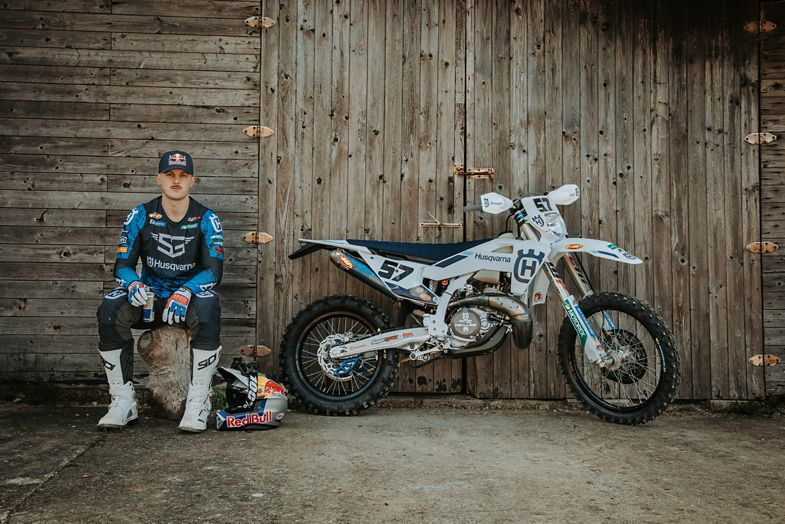
Billy Bolt - Husqvarna Factory Racing. Credit - Husqvarna

4am flights after racing until midnight. Eight-hour drives through Moscow traffic to sleep in a tent with no security. Getting stuck in an Indonesian mud hole for two laps while 12 people try to lift your bike as the crowd literally rides alongside you on the track. Dean Wilson said it best on Billy Bolt’s podcast: “It’s insane for people that haven’t done it to realize what the riders actually do go through.”

Bolt appeared on the Against the Rut podcast with Tom Searle and Dean Wilson to discuss life on the road as a professional enduro and motocross racer. What emerged was a window into a world that makes normal professional sports travel look like luxury tourism. These riders aren’t just athletes competing at the highest level, they’re nomadic warriors navigating chaos across continents.

The Russia Race Nobody Could Believe

Tom Searle kicked off the travel horror stories with a race that sounds completely made up. The 2012 Russian Grand Prix.

“Russia, it was always mad when we went there because I remember the track was like an eight-hour drive through all like Moscow traffic,” Searle recalled. “And it was the race where Jeffrey Herlings actually had a car crash trying to overtake in the traffic jam because he was missing his flight.”

But the drive was just the beginning. “The hotel for us was two and a half hours away from the track. So, we drove eight hours from the airport and then had to drive two and a half hours back towards the airport to even stay in a hotel.”

Some riders didn’t bother with the hotel at all. “Some of the riders ended up just like sleeping in trucks and under trucks and in tents. No security, nothing then.”

Zack Osborne set up a tent with his mom and just camped at the track. Multiple factory riders did the same because a four-hour daily commute on top of racing made no sense.

Searle summed it up perfectly: “It was just mad, like riders sleeping in tents.”

Indonesia: Racing in a Car Park With Crowds on Track

Bolt went to Indonesia in 2024 for what he described as “literally just a race for fun.” The experience captured everything about how different extreme enduro is from normal motorsport.

“The area of Indonesia we’re in was like the furthest part from being a tourist place,” Bolt explained. “Put it this way, I was expecting to see like travelers and backpackers like everywhere in the airport. I didn’t see a single traveler or like tourists, but people were just so happy and just wild, like couldn’t do enough for you.”

The event structure was bizarre. They did a qualifying race through the jungle with locals in sandals riding alongside the track. Then came the main event.

“The main race, we did quite a cool race in like the jungle and stuff which had like blokes in sandals like riding alongside the track,” Bolt said. “But that was just qualifying for the main race, which was literally a race around a car park and they just built these ginormous hill climbs out of the digger.”

The crowd situation got completely out of hand. “The crowd was literally in the track. Like you was hitting people out, weren’t you?” Tom asked.

“Yeah. Well, I actually got stuck again,” Bolt admitted. “I went in this mud hole and just couldn’t get out. It took like 12 people to pick my bike out, so I was stuck there for two laps.”

The locals loved every second of it.

The Travel Schedule That Breaks Bodies

Searle laid out what a typical European race week actually looks like, and it’s absurd when you hear it spelled out.

“When you think back to what we did do of setting off at three a.m. in the morning to get to Stansted London airport, which is like a two and a half hour drive to get a six, seven a.m. flight to travel all day to get to the track at seven p.m. in say Sweden or wherever it may be, it’s absolutely bonkers that then you woke up the next day and then raced Saturday and Sunday.”

Dean Wilson, racing the American supercross and motocross circuit, confirmed it’s just as brutal across the pond.

“The travel weighs, it takes a lot out of you, especially now, you know, I do it with the family and you’re racing until 10, 11 at night, get back to the hotel, 12:30, one, six a.m. flight at the airport, you know, up at four. It’s rough.”

Wilson admitted he’s reached a point where he just accepts never being at 100 percent. “I’m kind of gotten to a stage where I’m just used to not being 100 percent. Like when I flew to Abu Dhabi and raced and I was a big travel and man, I was up when everyone was sleeping, then during the day I was just dying through the day with the jet lag.”

Brazil and the Hundred Percent Import Tax

Searle shared another element of international racing that fans never see. Brazil’s import taxes make riding gear incredibly expensive, so riders became traveling salesmen.

“At the end of the weekend, everyone would come around because the flyways for MXGP, the ones where we couldn’t take trucks, they would have like this tent and everyone would pit under it,” Searle explained. “But then at the end of the weekend, everyone would want to buy anything you had. Like anything.”

He’d pack specifically to sell gear. “We would take extra gear and I’d basically go out there with like three gear bags and then come back with one because they would want to buy everything.”

One particularly wet race, riders just gave everything away. “The one race it was so wet and everything was just covered, so people just didn’t want to take anything back. We was just like, ‘Have it all.'”

Dean Wilson, who races for a Brazilian Honda team, confirmed the import situation is still brutal. “The tax is pretty bad. My team owner at Honda Brazil there, he always makes me bring a bunch of parts and stuff. Like I’ve had to make a stop at Pro Circuit and stuff for him and bring it over.”

Camel Racing and Robotic Monkeys at Three A.M.

Sometimes the culture shock hits in the middle of the night when you can’t sleep. Searle had one of those moments in Abu Dhabi.

“I always remember when I was racing in Abu Dhabi and I was up in the middle of the night because I couldn’t sleep. And on the TV was camel racing and on the camel there was a little robotic monkey slapping the thing and they’re like people betting on it.”

Dean Wilson had his own Abu Dhabi observations. “Flying into Abu Dhabi is a trip because like it’s just all desert, all desert. It was just weird coming in. It was like you’re flying into Mars or something and then there’s just buildings and then there’s just big houses.”

The Mechanics Who Never Stop Working

The riders stressed repeatedly that mechanics are the real heroes of this lifestyle. Dean Wilson broke down the American system.

“The mechanics, they fly pretty much seven days a week. You know, they race, we race Saturday. They work all day in the heat, you know, doing what the mechanics do. Sunday, usually they do a rebuild day, usually the hotel parking lots. They get an easy up, you know, in front of the semi truck, rebuild the bike, frame it, engine out, scrub it, engine back in so it’s ready for the next weekend.”

Then they fly home for two days and turn right back around. “They’ll fly out Sunday night back to the shop Monday, Tuesday, and then most of them fly Wednesday or Thursday to the race, set up the tent, dial in the bike.”

Searle talked about his mechanic from his racing days. “The one that speaks to me, Mindo, who was my mechanic, he’s Belgian, and he was my mechanic at CLS. His whole life has just been dedicated to being a mechanic. He’s still now doing the same thing years on, but he’s still just one of the best mechanics in the paddock.”

Many mechanics sacrifice having families entirely because they’re on the road constantly. “Some of them don’t have families because they’ve just literally worked tirelessly on the road for years and years and years.”

How Motorbikes Run Entire Ecosystems

Bolt made an observation about countries like Indonesia and the Dominican Republic that puts the sport in perspective.

“What I found pretty mad was how much them countries rely on motorbikes. Like it is the biggest form of transport by like a million miles. Like that’s all you see. Without motorbikes the ecosystem wouldn’t exist.”

Tom agreed from his experience. “You go roundabout and it’s just yeah, moped heads just scan round this roundabout. It’s wild. Like we had to ride on the road to the start of each day.”

Dean Wilson experienced the same in Brazil. “When you get there, you’re in traffic. There’s just bikes going like through the middle. That’s all you hear. And then it’s just like there’s just so much going on. Helicopters flying over. It’s like you’re in a scene of like Grand Theft Auto.”

The Mental Compartmentalization Required

What makes all of this even more remarkable is that riders have to arrive at these chaotic locations and perform at the absolute highest level. Bolt touched on this when discussing Manuel Lettenbichler wrapping up the 2024 Hard Enduro championship.

“Obviously Manny wrapped the championship up in Germany last weekend. So, kind of makes it a bit easier for me to just put my focus onto indoor training now.”

That casual comment reveals how elite athletes compartmentalize. Lettenbichler winning the outdoor championship while Bolt recovered from knee surgery just meant shifting focus completely to SuperEnduro training. No dwelling, no excuses, just adapting to the situation.

Bolt’s ability to win seven straight SuperEnduro rounds on a destroyed knee, then make the mature decision to have surgery, shows the mental discipline required. These riders navigate absolute chaos in their travel and racing schedule while making calculated decisions about their careers and bodies.

The Reality Behind the Results

When you see race results or championship standings, none of this context appears. You don’t see the eight-hour Moscow traffic jam, the tent camping at the track, the mechanics rebuilding bikes in hotel parking lots at midnight, or the 4am. wake-up calls after racing until 11pm.

You just see who won.

Searle captured it perfectly when talking about stepping away from racing. “It’s not until you step out of it all like where I am now, obviously just racing in a domestic championship, that you just think, wow, that is nuts.”

These riders live a version of professional sports that makes NBA or NFL travel look like vacation planning. They’re dealing with language barriers, wildly different safety standards, import taxes, mechanics working around the clock, and somehow staying mentally sharp enough to compete at a world championship level.

Billy Bolt races with crowds literally on the track in Indonesia. He wins SuperEnduro rounds with a torn ACL. Manuel Lettenbichler dominates Hard Enduro while managing the chaos of racing in locations where the ecosystem runs on motorbikes.

The next time you see an enduro or motocross result, remember what it took just to get to the starting line.
Billy Bolt’s Body Gave Out in Germany – Twice. Here’s What He Learned

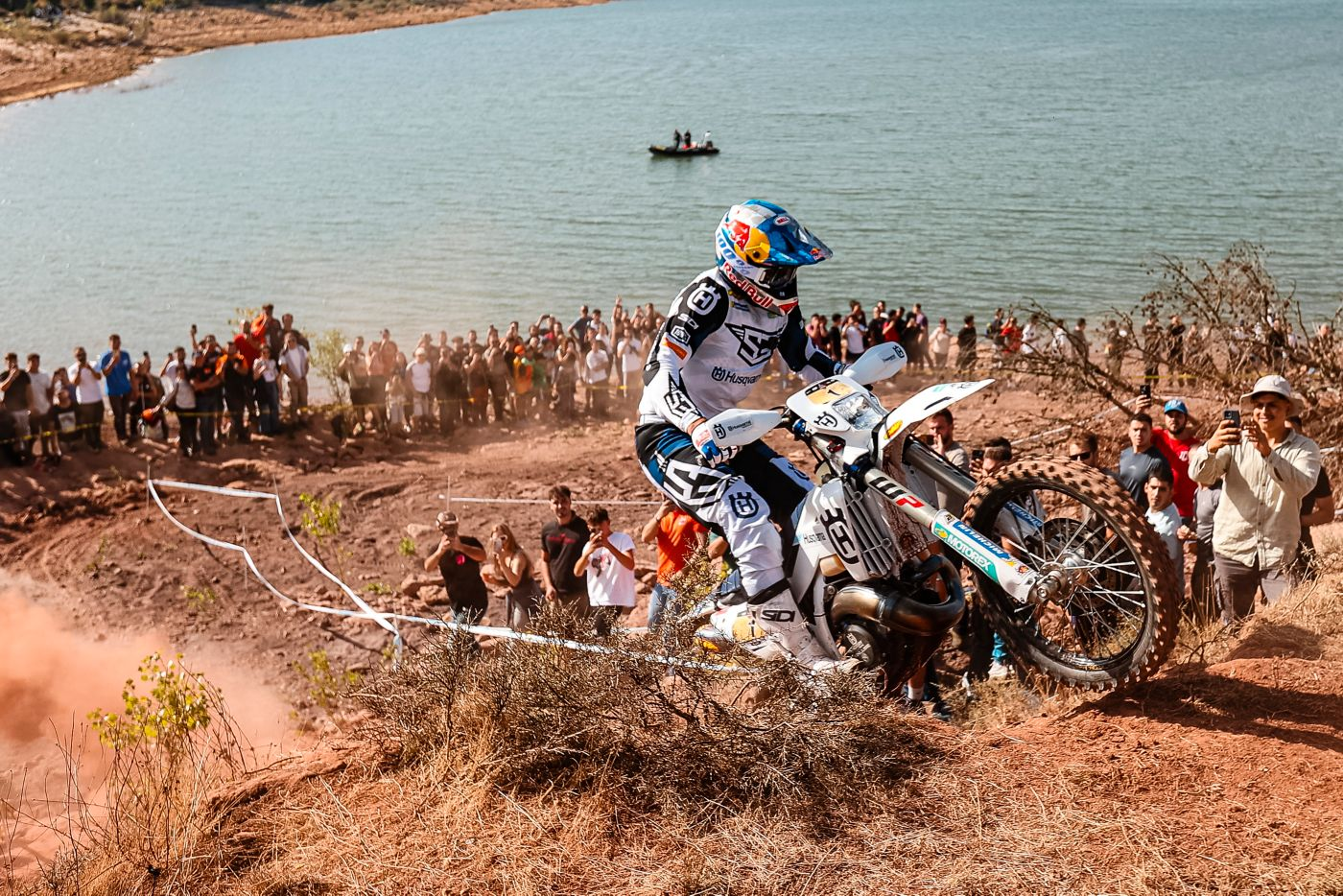
Husqvarna Factory Racing’s Billy Bolt. Credit: Husqvarna

Billy Bolt rode seven SuperEnduro rounds in 2024 with a torn ACL, shredded meniscus, and two fractured bones in his lower leg. He won all seven. Then he made a decision that the younger version of himself never would have made: he stopped racing and had surgery. The journey from that choice reveals everything about how elite athletes actually break down.

Bolt opened up about his relationship with rest, recovery, and the crushing pressure to never stop during his appearance on the Against the Rut podcast with Tom Searle and Dean Wilson. His story connects two moments in Germany that bookend what he’s learned about listening to your body versus grinding through everything.

Germany 2018: Running on Empty

The first Germany moment came at the 2018 Tong race in the British Extreme Championship. Bolt was in his second year with Husqvarna, carrying expectations, and something inside him snapped during the race.

“I didn’t ride good, completely like lost my head, got so angry like during the race,” Bolt recalled. “I’m just like holding this thing on the rev limiter going nowhere, making an absolute tit of myself.”

He finished third. Paul Bolton passed him on the final lap while Graham Jarvis won comfortably. Bolt threw his bike down, smashed his helmet into the ground, and watched it bounce into a fishing pond. His mechanic Stan loaded the bike and left without speaking to him.

Looking back on the podcast, Bolt recognised what was really happening. His body and mind were telling him something was wrong, but he didn’t have the tools to understand the message. He just knew he felt overwhelmed and responded by losing control completely.

Germany 2024: A Different Response

Fast forward to the 2024 SuperEnduro round in Germany. Bolt landed awkwardly in practice and immediately knew something was seriously wrong. He’d torn his ACL, damaged his meniscus, and fractured his tibia in two places.

The pain left him on the floor. But this time, instead of emotional chaos, he made a calculated assessment. He could race. He did race. He won that round and the next six, claiming his fourth consecutive SuperEnduro title.

Then came the decision that defined his growth. With the Hard Enduro World Championship starting and Manuel Lettenbichler in dominant form, Bolt chose surgery over pushing through. He sat out the first half of the outdoor season while his knee healed properly.

“Obviously Manny wrapped the championship up in Germany last weekend,” Bolt said on the podcast. “So, kind of makes it a bit easier for me to just put my focus onto indoor training now.”

The old Billy Bolt would have tried to race through it and probably ended his career early. The mature version understood when to stop.

The American System That Breaks Riders

During the podcast discussion about travel and training culture, Bolt touched on something that connects directly to his injury experience. He observed a fundamental difference between European and American racing mentality.

“I find a bit mad about in America, and I don’t know, this might be untrue, but this is how it seems,” Bolt said. “It’s portrayed that like it’s so strict with your kind of in the week stuff as well. Like even when you’re like three quarters of the way through the year, it’s like everyone still rides two days a week or whatever.”

He continued, “I just feel like when you’re that far into a year and you’ve done that many flights and that many travel, surely there’s times when you just say like, whoa, like my body just needs this week of like nothing to be able to race next weekend.”

Dean Wilson, the American motocross rider on the podcast, agreed. “The season’s like a bit too long on our side. The writers are very few of us writers are making it through all the way through. I think we need to figure it out and chop it down somehow because the writers are just getting fried.”

Bolt contrasted this with European flexibility. “Whereas I think Europe’s a bit more there’s a bit more give, a lot more.”

Husqvarna Factory Racing’s Billy Bolt. Credit: Husqvarna

Winning After Two Weeks Off

Bolt shared something that challenges the entire rigid training narrative. Sometimes rest works better than grinding through prescribed schedules.

“I just know for myself, like there’s been weeks or like even several weeks I’ve thought I just need to do nothing and I’ve turned up at a race and not rode for two weeks and I’ve still won,” he explained. “There’s races that I’ve turned up for after not riding for two weeks and I’ve still won.”

That admission cuts through conventional wisdom about constant training. Bolt has reached a level where he understands his body well enough to know when backing off produces better results than pushing through.

“From the outside, America looks so regimented and so strict that it just… it’s no wonder people get burned out,” he said.

The Spiral That Confirms Everything

Bolt experienced exactly what happens when you ignore your body’s signals. After breaking his back in Abu Dhabi early in 2024, he took six weeks off and returned feeling better than he had all year.

“Even for me this year, I broke my back in Abu Dhabi when we was out there, Dean, and then I had six weeks off and then I returned to a race and almost felt the best I’d felt all year other than feeling a little bit rusty in qualifying,” he said.

But then the pressure to keep racing kicked in. “Then I did feel like I had to then have another week off because I hadn’t rode and that had knackered me out from that race. And then I had another race and then I almost got in a spiral where I could only go, I couldn’t practice for a bit because I was that tired from each race weekend.”

That spiral, where racing without recovery leads to more fatigue and worse performance, is exactly what he avoided by choosing surgery after Germany. The toll doesn’t show up immediately. It compounds over weeks until you’re racing below your capability and risking serious injury.

What This Actually Means

Bolt returned from his knee surgery to win Hixpania Hard Enduro, then dominated the 2025 SuperEnduro season to claim his fifth consecutive title. The time off didn’t hurt him. It probably extended his career.

The contrast between 2018 Germany and 2024 Germany shows what separates champions who last from those who burn out. In 2018, he didn’t know how to read his body’s signals and responded with emotional chaos. In 2024, he pushed through seven rounds on a destroyed knee, then made the hard choice to stop before permanent damage set in.

Tom Searle, the retired rider on the podcast, captured the broader issue. “It’s insane for people that haven’t done it to realize what the riders actually do go through aside from the racing, just traveling to an event.”

Bolt’s point isn’t that riders should never push through pain or fatigue. It’s that the culture of rigid training schedules and never backing off creates a system where athletes can’t make smart decisions about their own bodies. Sometimes the bravest thing a champion can do is recognise when stopping makes them stronger.

His body gave out twice in Germany. The first time, he didn’t know how to handle it. The second time, he made the right call and came back better than ever.

Billy Bolt’s Meltdown at Tong: The Moment That Changed Everything

Billy Bolt's Meltdown at Tong: The Moment That Changed Everything

Billy Bolt’s career didn’t turn on a podium or a title win. It started with a helmet thrown in anger, a long silent drive home, and a humiliating fishing expedition in a Yorkshire pond. After finishing third at the 2018 Tong round, he lost his head completely. The fallout from that day ended up shaping him into a five-time world champion.

Bolt opened up about that moment during his recent appearance on the Against the Rut podcast with Tom Searle and Dean Wilson. What’s striking is how a single meltdown at a muddy British race became the catalyst for learning how to handle pressure, and the start of a very different approach to his career.

The Tong Disaster

Heading into the 2018 Tong race, Bolt was in his second year with Husqvarna and coming in with expectations. But during the race, something snapped. As he described it on the podcast, he completely lost his composure.

“I didn’t ride good, completely like lost my head, got so angry like during the race,” Bolt recalled. “I’m just like holding this thing on the rev limiter going nowhere, making an absolute tit of myself, shouting at everyone. It was like fully head gone, like couldn’t hack.”

Graham Jarvis won by miles. Paul Bolton passed Billy on the last lap. Although third wasn’t a disaster on paper, Bolt didn’t see it that way in the moment.

“I finished the race and I came third. Paul Bolton passed us on the last lap. Graeme won miles ahead,” he explained. “I threw my bike down, smashed my helmet off the ground.”

What happened next became the defining image of that day. The helmet bounced off a rock and landed in the fishing pond next to the paddock area where locals would cast their lines.

“There’s actually a little pond by the paddock at Tong where people fish into, and it bounced off this rock and my helmet landed in the lake and I had to go and get it out,” Bolt said.

His mechanic Stan picked up the bike without a word and left the circuit entirely. “Stan picks the bike up, puts it in the van, he just leaves, left the race, didn’t even say goodbye. He’s like, ‘I’m not even talking to you.'”

The silence continued for days.

A Childhood Influence That Wasn’t So Cool

Bolt admitted on the podcast that he’d been influenced as a kid by watching speedway racing at Newcastle, just two miles from his house. A rider named Nikki Pettison used to throw his helmet into the pits after bad races, and young Billy thought it looked impressive.

“I used to watch Speedway a lot as I was a kid. There was the Newcastle Shack was like 2 miles from my house, and there was a rider that used to ride for them who, like, when he used to have a bad race would just come in and throw his helmet into the pits,” Bolt explained. “I would be like a little kid watching it and for some reason that was just like, I used to think it was quite cool.”

Standing in that pond, fishing out his own helmet, he realised just how wrong he’d been. “Anyway, it’s not cool. And I did it once, ticked it off the list.”

The Turning Point

The moment hit him hard when Stan refused to speak to him. “I was just like, it hit us. I was like, ‘Whoa, I need to… That was embarrassing. Like, I need to sort myself out. Like, that can’t happen. Like, I can’t behave like that.'”

Bolt made a crucial decision after Tong. He started working with a sports psychologist to learn how to control his emotions and channel his anger productively instead of letting it explode.

“So then I went and started to work with a psychologist to try and control emotions and use my anger in a positive way,” he said on the podcast.

That work came into play years later. In 2024, during practice at the German SuperEnduro round, Bolt landed awkwardly and suffered a torn ACL, damaged meniscus, and two tibial fractures. The pain was intense enough to leave him on the floor, but this time he didn’t react emotionally.

He took stock, decided he could race, and went on to win not just that round but seven straight events to claim his fourth SuperEnduro title. Later, he made the mature call to have surgery and sit out the first half of the Hard Enduro season to avoid long-term damage.

From Hot Head to Calculated Champion

The difference between the 2018 meltdown and the way he handled 2024 injuries is stark. While recovering from surgery, Manuel Lettenbichler wrapped up the Hard Enduro championship. Bolt acknowledged this on the podcast, saying, “Obviously Manny wrapped the championship up in Germany last weekend. So, kind of makes it a bit easier for me to just put my focus onto indoor training now.”

But Bolt returned to win at Hixpania Hard Enduro and added a fifth consecutive SuperEnduro crown in 2025. He’s still a passionate rider, but he channels it differently now.

The psychology work helped him stay calm under pressure and make better decisions. “There’s been weeks or like even several weeks I’ve thought I just need to do nothing and I’ve turned up at a race and not rode for two weeks and I’ve still won,” he explained, discussing how he’s learned to trust his instincts about when to rest.

Stan forgave him eventually. “Yeah, we hugged it out a few days later when I went, I think I had to go and pick my bike up from his or whatever. I was like, ‘No, that’s… I’m sorry. I’m an embarrassment.'”

The apology mattered, but the real change came from understanding why he needed to apologise in the first place.

The Moment That Defined Him

Every champion has a turning point. For Bolt, it wasn’t a victory or a breakthrough ride. It was standing in a fishing pond at Tong, holding a helmet he’d thrown in a tantrum, realising he’d just acted out a childhood fantasy that should never have been one.

That embarrassment pushed him to get help, develop the mental tools to match his physical ability, and become a rider capable of winning SuperEnduro rounds on a destroyed knee while also knowing when to step back.

The helmet landed in the lake. But Bolt came out stronger on the other side.

Feature Image: ‎⁨@TheWorldDirtCollective YouTube

Billy Bolt Opens Up After Battling Sickness at Sea to Sky Hard Enduro – ‘It Just Wasn’t My Day’

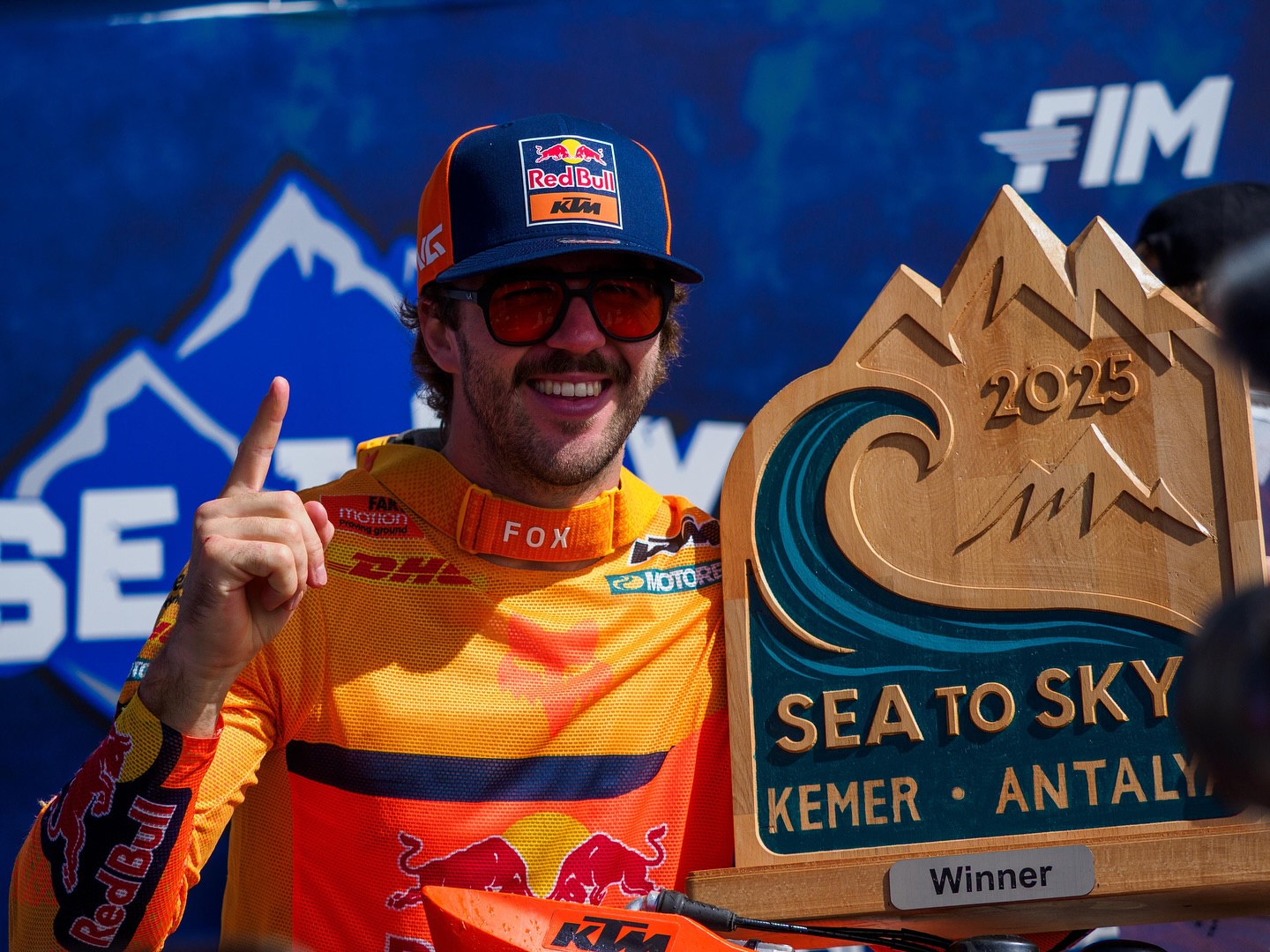
Sea to sky. Credit: seatosky_official instagram

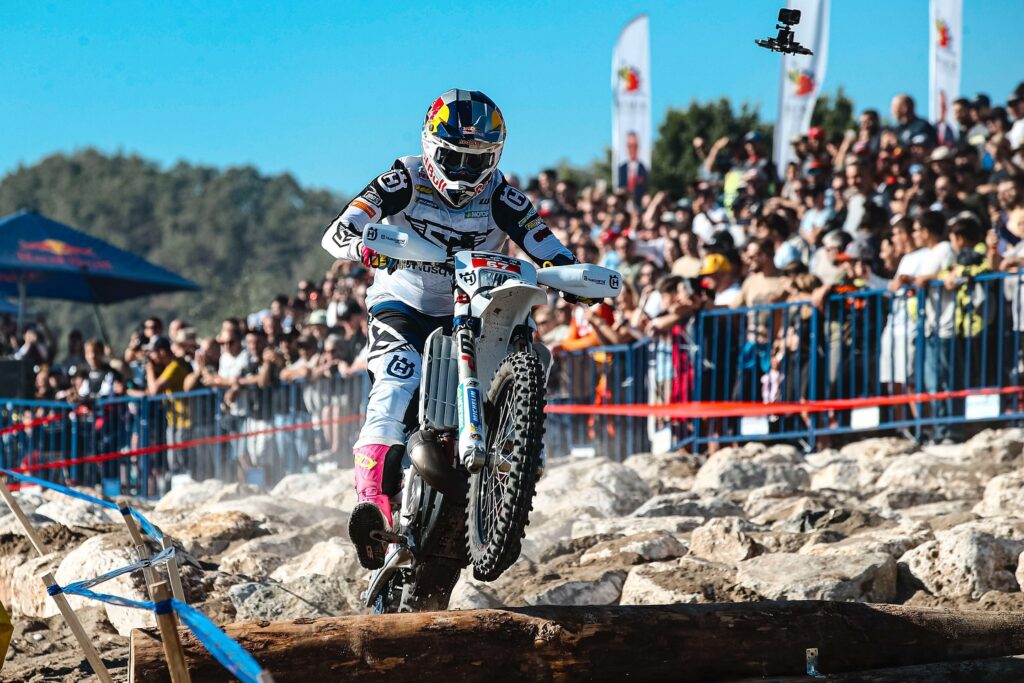
Billy Bolt of Husqvarna Factory Racing faced a challenging fifth round of the FIM Hard Enduro World Championship at Turkey’s Sea to Sky, struggling with illness over the three-day event and ultimately placing 11th overall.

Following impressive displays at rounds three and four of the championship in Italy and Spain in September, Billy was eager to maintain that excellent performance on his TE 300 at round five. The three-day racing format featuring Beach Race, Forest Race, and Mountain Race typically benefits the Brit, enabling him to demonstrate his diverse hard enduro abilities.

As the Beach Race kicked off on Thursday, Billy was determined to leave his impression, even though he was dealing with an illness. 

Navigating the qualifiers and heat races, he advanced to the super final with notable ease. Despite being low on energy, the brief race benefited him, allowing him to secure a solid victory and earn the three championship points available.

For the time trial on Friday, the Forest Race featured a course exceeding 40 kilometres that led participants deep into the forest and over rugged trails near the city of Kemer. Managing his pace effectively, Billy propelled his TE 300 to achieve the fourth fastest time, securing additional championship points.

Sea to Sky 2025 - Credit: billybolt57
Sea to Sky 2025 – Credit: billybolt57

Saturday’s highlighted Mountain Race had participants dash from the seaside at Kemer to the peak of the nearby Olympos Mountain, which stands at 2,366 meters high. Measuring 64 kilometres in distance, the route is infamous for its unyielding elevation gain and progressively challenging obstacles and terrain.

Turkey’s Sea to Sky hard enduro results
1. Manuel Lettenbichler (KTM) 3:49:24.25
2. Mario Roman (Sherco) 3:55:12.01
3. Mitch Brightmore (GASGAS) 4:02:41.37
4. Wade Young (GASGAS) 4:20:33.90
5. Graham Jarvis (Husqvarna) 4:23:20.48
11. Billy Bolt (Husqvarna) 4:44:28.52

Aware that his illness would hinder him, Billy was resolved to give his all and finish in the best possible position. Beginning strong, he maintained contact with the front group of cyclists as they navigated the initial rugged canyon areas. Regrettably, a navigation mistake caused Billy to fall behind the leaders, compelling him to struggle through the rest of the race alone. Worn out at the finish line, he secured a well-earned 11th place overall.

The Husqvarna Factory Racing squad now shifts focus to the sixth round and second-to-last event of the FIM HEWC at Germany’s GetzenRodeo on October 24-25

Bolt said: “It became a tough race for me here in Turkey. I have been pretty sick all week and today I just struggled. I tried to hang with the leaders as long as possible, but it was hard to manage to do that. Then I made a large navigation error and lost touch with them. As the course became increasingly difficult the higher up the mountain we rode, my physical condition suffered. Unfortunately, it wasn’t my day or week here. Hopefully I can rest up, get healthy again, and return to my best and push Mani for the win at GetzenRodeo in a few weeks’ time.”

Husqvarna trims 2026 enduro line-up with TE two-strokes and FE450 four-stroke

Credit: Husqvarna

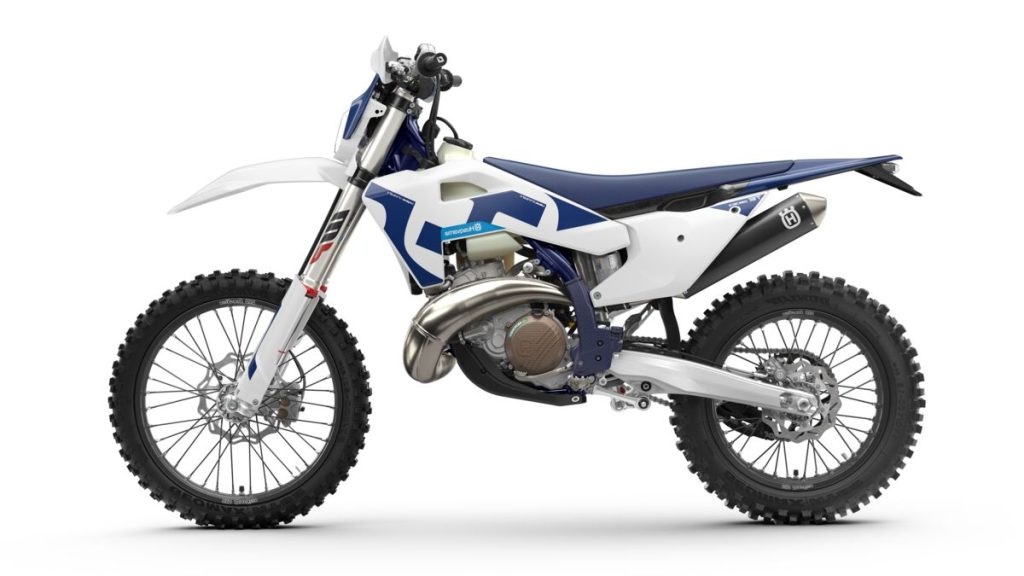
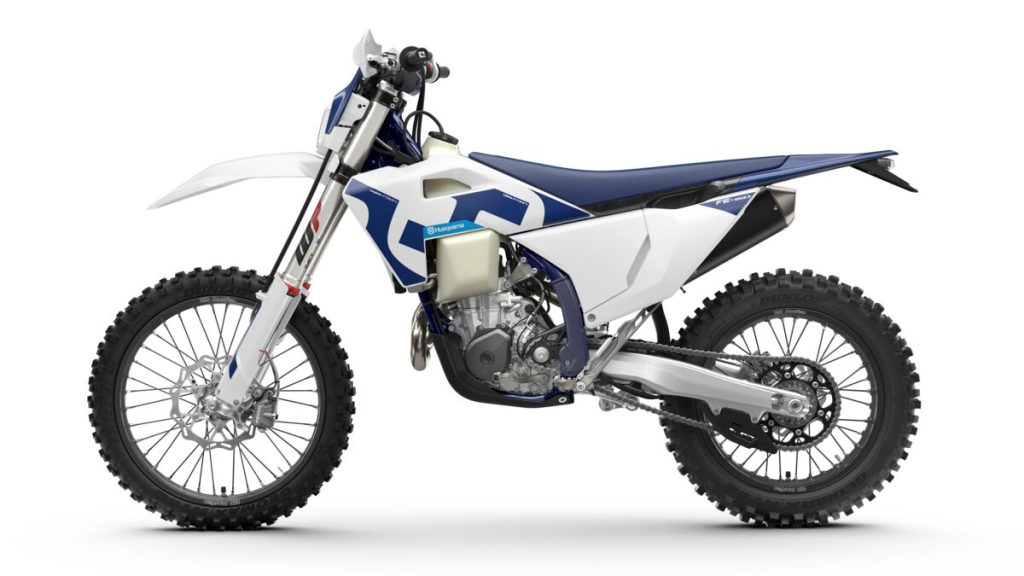
Husqvarna has stripped down its 2026 off-road range, keeping only four models for now. The TE150, TE250, TE300, and FE450 all return with key updates – but some fan favourites are missing.

Husqvarna has officially unveiled its 2026 off-road range now, as anticipated pretty much confirming a more narrow range built around three TE two-strokes and the FE450 four-stroke. The news comes after the release earlier in the year of the FX350 and suggests Husqvarna is streamlining its range, with dual-sport and special editions to appear later in 2025.

Familiar names return

The 2026 enduro series will include the TE150, TE250, and TE300 two-strokes returning with fresh updates, alongside the flagship FE450 four-stroke. Prices will remain close to 2025 MSRPs, but Husqvarna says riders can look for destination and local fees to be added separately on dealer plates.

Credit: Husqvarna

For two-stroke fans, Throttle Body Injection continues across the TE model line, giving a more predictable throttle feeling and more refined power delivery. Compared to that, the FE450 has traction control, engine maps that can be selected, and a Quickshifter to give smooth upshifts even when on power.

Credit: Husqvarna

Suspension and tech advancements

Husqvarna has also touched on suspension. The WP XACT Closed Cartridge forks now feature polished springs, a new pressure reservoir, and a one-piece hydrostop designed to improve damping. Companion changes to the WP XACT rear shock promise improved balance and more advanced handling on all four models.

Other upgrades include fresh graphics, radiator covers, and fork protectors, along with a fuel line guard and threaded radiator cap for added strength. The FE450 also has the advantage of a radiator fan to keep temperatures constant under pressure.

Availability

Husqvarna says the 2026 models will begin arriving at dealerships in fall 2025. While this release focuses on core enduro machines, more variants – including dual-sports and limited editions – are expected later in the year.

Husqvarna’s 701 Enduro just got a major upgrade – here’s what’s new for 2025

Husqvarna 701 Enduro. Credit: Husqvarna

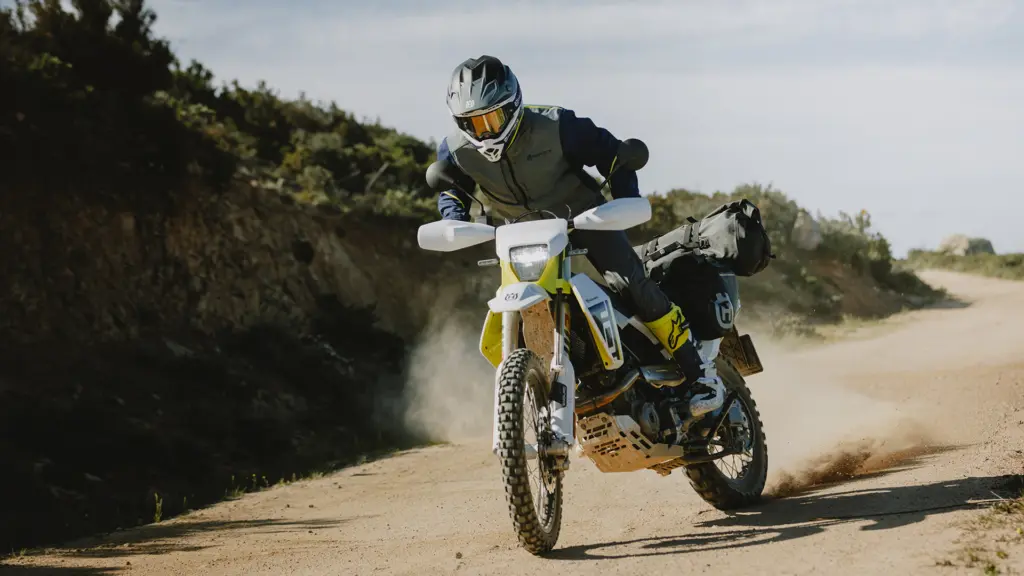
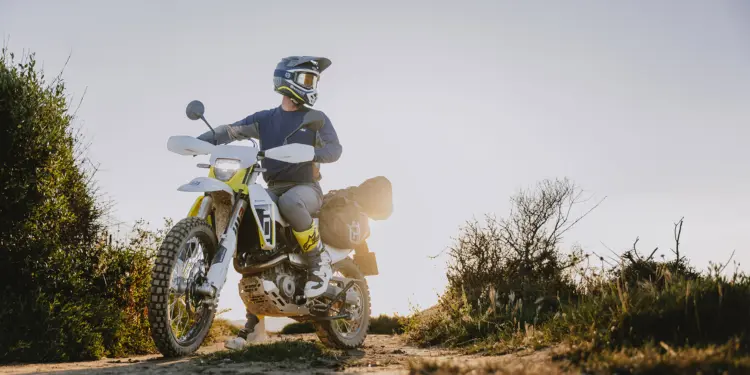
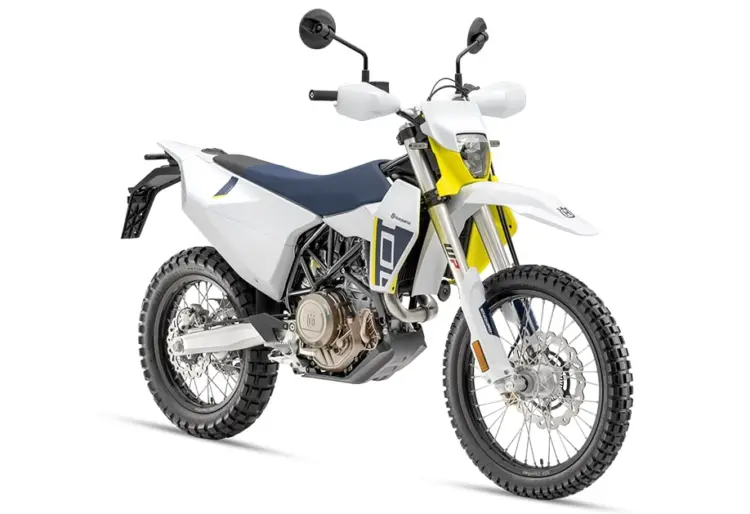
The Husqvarna 701 Enduro has been updated for 2025 and continues to stand out as one of the finest dual-sport motorcycles available. It’s built to tackle rough trails just as confidently as long-distance road trips, blending off-road ability with modern technology.

Power and performance

The 701 Enduro is powered by Husqvarna’s 692.7cc single-cylinder LC4 engine, now refined with redesigned crankcases to cut drag and boost efficiency. It produces 79hp and 73Nm of torque, delivering strong but manageable acceleration.

Riders get a smooth ride thanks to ride-by-wire throttle response and a six-speed gearbox. An optional Quickshifter+ allows seamless clutchless up- and downshifts.

Off-road chassis

Built on a lightweight steel trellis frame, the 701 Enduro shows its dirt credentials through high-quality WP XPLOR suspension. The 48mm USD forks offer 265mm of travel, while the rear Pro-Lever shock gives 250mm.

Brembo brakes handle the stopping power with 300mm and 240mm discs, paired with Bosch ABS that can be switched between road and off-road modes – or turned off completely for maximum rider control.

Husqvarna 701 Enduro. Credit: Husqvarna

Tech and connectivity

A 4.2-inch anti-glare TFT display is now standard, with smartphone connectivity via the Ride Husqvarna app. Riders can take calls, stream music and use Turn-by-Turn+ navigation.

Selectable ride modes – Street, Offroad and Rally – adjust engine response and traction control to match conditions.

Rider-focused design

At just 152kg dry, the 701 Enduro is easy to manage both on and off the road. Sleek new bodywork, a built-in fuel tank and extended seat design improve rider comfort and mobility in technical sections.

Husqvarna 701 Enduro. Credit: Husqvarna

Husqvarna 701 Key specs

  • Engine: 692.7cc single-cylinder, liquid-cooled
  • Power: 79hp
  • Torque: 73Nm
  • Gearbox: 6-speed with optional Quickshifter+
  • Suspension: WP XPLOR – 265mm front / 250mm rear
  • Brakes: Brembo – 300mm front / 240mm rear
  • ABS: Bosch, road/offroad, switchable
  • Seat height: 935mm
  • Ground clearance: 265mm
  • Tank capacity: 13.5L
  • Dry weight: 152kg

Husqvarna’s 701 Official Promo

Every path, every horizon, a call to escape the cacophony and discover something better. It’s more than just a motorcycle. It’s the secret to your freedom.
Constructed with accuracy, strength, and unparalleled adaptability, it flourishes in areas where the map disappears, such as rocky mountain passes and undiscovered back roads.

It takes you into the wild and away from stereotypes. For people who value exploration over routine and who are looking for more than just a ride. With the new 701 Enduro, enjoy every second.