
Inside the Chaos: What Billy Bolt’s Podcast Reveals About Life as a Hard Enduro Rider
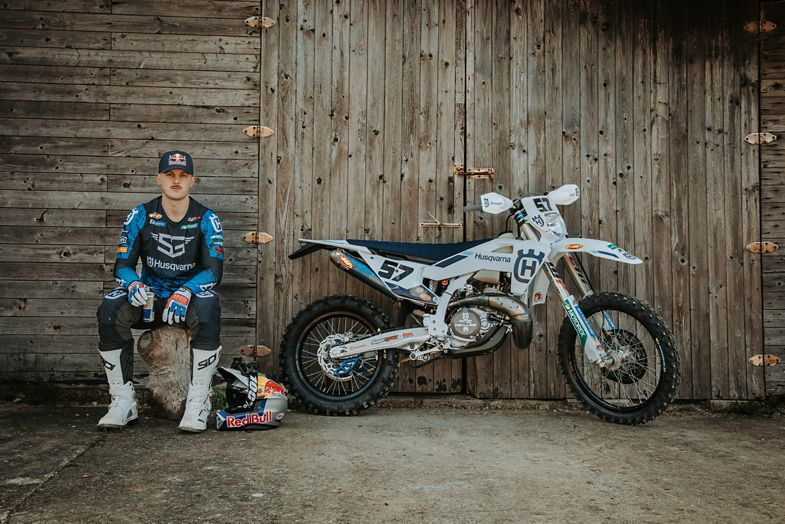
4am flights after racing until midnight. Eight-hour drives through Moscow traffic to sleep in a tent with no security. Getting stuck in an Indonesian mud hole for two laps while 12 people try to lift your bike as the crowd literally rides alongside you on the track. Dean Wilson said it best on Billy Bolt’s podcast: “It’s insane for people that haven’t done it to realize what the riders actually do go through.”
Bolt appeared on the Against the Rut podcast with Tom Searle and Dean Wilson to discuss life on the road as a professional enduro and motocross racer. What emerged was a window into a world that makes normal professional sports travel look like luxury tourism. These riders aren’t just athletes competing at the highest level, they’re nomadic warriors navigating chaos across continents.
The Russia Race Nobody Could Believe
Tom Searle kicked off the travel horror stories with a race that sounds completely made up. The 2012 Russian Grand Prix.
“Russia, it was always mad when we went there because I remember the track was like an eight-hour drive through all like Moscow traffic,” Searle recalled. “And it was the race where Jeffrey Herlings actually had a car crash trying to overtake in the traffic jam because he was missing his flight.”
But the drive was just the beginning. “The hotel for us was two and a half hours away from the track. So, we drove eight hours from the airport and then had to drive two and a half hours back towards the airport to even stay in a hotel.”
Some riders didn’t bother with the hotel at all. “Some of the riders ended up just like sleeping in trucks and under trucks and in tents. No security, nothing then.”
Zack Osborne set up a tent with his mom and just camped at the track. Multiple factory riders did the same because a four-hour daily commute on top of racing made no sense.
Searle summed it up perfectly: “It was just mad, like riders sleeping in tents.”
Indonesia: Racing in a Car Park With Crowds on Track
Bolt went to Indonesia in 2024 for what he described as “literally just a race for fun.” The experience captured everything about how different extreme enduro is from normal motorsport.
“The area of Indonesia we’re in was like the furthest part from being a tourist place,” Bolt explained. “Put it this way, I was expecting to see like travelers and backpackers like everywhere in the airport. I didn’t see a single traveler or like tourists, but people were just so happy and just wild, like couldn’t do enough for you.”
The event structure was bizarre. They did a qualifying race through the jungle with locals in sandals riding alongside the track. Then came the main event.
“The main race, we did quite a cool race in like the jungle and stuff which had like blokes in sandals like riding alongside the track,” Bolt said. “But that was just qualifying for the main race, which was literally a race around a car park and they just built these ginormous hill climbs out of the digger.”
The crowd situation got completely out of hand. “The crowd was literally in the track. Like you was hitting people out, weren’t you?” Tom asked.
“Yeah. Well, I actually got stuck again,” Bolt admitted. “I went in this mud hole and just couldn’t get out. It took like 12 people to pick my bike out, so I was stuck there for two laps.”
The locals loved every second of it.

The Travel Schedule That Breaks Bodies
Searle laid out what a typical European race week actually looks like, and it’s absurd when you hear it spelled out.
“When you think back to what we did do of setting off at three a.m. in the morning to get to Stansted London airport, which is like a two and a half hour drive to get a six, seven a.m. flight to travel all day to get to the track at seven p.m. in say Sweden or wherever it may be, it’s absolutely bonkers that then you woke up the next day and then raced Saturday and Sunday.”
Dean Wilson, racing the American supercross and motocross circuit, confirmed it’s just as brutal across the pond.
“The travel weighs, it takes a lot out of you, especially now, you know, I do it with the family and you’re racing until 10, 11 at night, get back to the hotel, 12:30, one, six a.m. flight at the airport, you know, up at four. It’s rough.”
Wilson admitted he’s reached a point where he just accepts never being at 100 percent. “I’m kind of gotten to a stage where I’m just used to not being 100 percent. Like when I flew to Abu Dhabi and raced and I was a big travel and man, I was up when everyone was sleeping, then during the day I was just dying through the day with the jet lag.”
Brazil and the Hundred Percent Import Tax
Searle shared another element of international racing that fans never see. Brazil’s import taxes make riding gear incredibly expensive, so riders became traveling salesmen.
“At the end of the weekend, everyone would come around because the flyways for MXGP, the ones where we couldn’t take trucks, they would have like this tent and everyone would pit under it,” Searle explained. “But then at the end of the weekend, everyone would want to buy anything you had. Like anything.”
He’d pack specifically to sell gear. “We would take extra gear and I’d basically go out there with like three gear bags and then come back with one because they would want to buy everything.”
One particularly wet race, riders just gave everything away. “The one race it was so wet and everything was just covered, so people just didn’t want to take anything back. We was just like, ‘Have it all.'”
Dean Wilson, who races for a Brazilian Honda team, confirmed the import situation is still brutal. “The tax is pretty bad. My team owner at Honda Brazil there, he always makes me bring a bunch of parts and stuff. Like I’ve had to make a stop at Pro Circuit and stuff for him and bring it over.”
Camel Racing and Robotic Monkeys at Three A.M.
Sometimes the culture shock hits in the middle of the night when you can’t sleep. Searle had one of those moments in Abu Dhabi.
“I always remember when I was racing in Abu Dhabi and I was up in the middle of the night because I couldn’t sleep. And on the TV was camel racing and on the camel there was a little robotic monkey slapping the thing and they’re like people betting on it.”
Dean Wilson had his own Abu Dhabi observations. “Flying into Abu Dhabi is a trip because like it’s just all desert, all desert. It was just weird coming in. It was like you’re flying into Mars or something and then there’s just buildings and then there’s just big houses.”
The Mechanics Who Never Stop Working
The riders stressed repeatedly that mechanics are the real heroes of this lifestyle. Dean Wilson broke down the American system.
“The mechanics, they fly pretty much seven days a week. You know, they race, we race Saturday. They work all day in the heat, you know, doing what the mechanics do. Sunday, usually they do a rebuild day, usually the hotel parking lots. They get an easy up, you know, in front of the semi truck, rebuild the bike, frame it, engine out, scrub it, engine back in so it’s ready for the next weekend.”
Then they fly home for two days and turn right back around. “They’ll fly out Sunday night back to the shop Monday, Tuesday, and then most of them fly Wednesday or Thursday to the race, set up the tent, dial in the bike.”
Searle talked about his mechanic from his racing days. “The one that speaks to me, Mindo, who was my mechanic, he’s Belgian, and he was my mechanic at CLS. His whole life has just been dedicated to being a mechanic. He’s still now doing the same thing years on, but he’s still just one of the best mechanics in the paddock.”
Many mechanics sacrifice having families entirely because they’re on the road constantly. “Some of them don’t have families because they’ve just literally worked tirelessly on the road for years and years and years.”
How Motorbikes Run Entire Ecosystems
Bolt made an observation about countries like Indonesia and the Dominican Republic that puts the sport in perspective.
“What I found pretty mad was how much them countries rely on motorbikes. Like it is the biggest form of transport by like a million miles. Like that’s all you see. Without motorbikes the ecosystem wouldn’t exist.”
Tom agreed from his experience. “You go roundabout and it’s just yeah, moped heads just scan round this roundabout. It’s wild. Like we had to ride on the road to the start of each day.”
Dean Wilson experienced the same in Brazil. “When you get there, you’re in traffic. There’s just bikes going like through the middle. That’s all you hear. And then it’s just like there’s just so much going on. Helicopters flying over. It’s like you’re in a scene of like Grand Theft Auto.”

The Mental Compartmentalization Required
What makes all of this even more remarkable is that riders have to arrive at these chaotic locations and perform at the absolute highest level. Bolt touched on this when discussing Manuel Lettenbichler wrapping up the 2024 Hard Enduro championship.
“Obviously Manny wrapped the championship up in Germany last weekend. So, kind of makes it a bit easier for me to just put my focus onto indoor training now.”
That casual comment reveals how elite athletes compartmentalize. Lettenbichler winning the outdoor championship while Bolt recovered from knee surgery just meant shifting focus completely to SuperEnduro training. No dwelling, no excuses, just adapting to the situation.
Bolt’s ability to win seven straight SuperEnduro rounds on a destroyed knee, then make the mature decision to have surgery, shows the mental discipline required. These riders navigate absolute chaos in their travel and racing schedule while making calculated decisions about their careers and bodies.
The Reality Behind the Results
When you see race results or championship standings, none of this context appears. You don’t see the eight-hour Moscow traffic jam, the tent camping at the track, the mechanics rebuilding bikes in hotel parking lots at midnight, or the 4am. wake-up calls after racing until 11pm.
You just see who won.
Searle captured it perfectly when talking about stepping away from racing. “It’s not until you step out of it all like where I am now, obviously just racing in a domestic championship, that you just think, wow, that is nuts.”
These riders live a version of professional sports that makes NBA or NFL travel look like vacation planning. They’re dealing with language barriers, wildly different safety standards, import taxes, mechanics working around the clock, and somehow staying mentally sharp enough to compete at a world championship level.
Billy Bolt races with crowds literally on the track in Indonesia. He wins SuperEnduro rounds with a torn ACL. Manuel Lettenbichler dominates Hard Enduro while managing the chaos of racing in locations where the ecosystem runs on motorbikes.
The next time you see an enduro or motocross result, remember what it took just to get to the starting line.